The Greatest Predictor of Homelessness
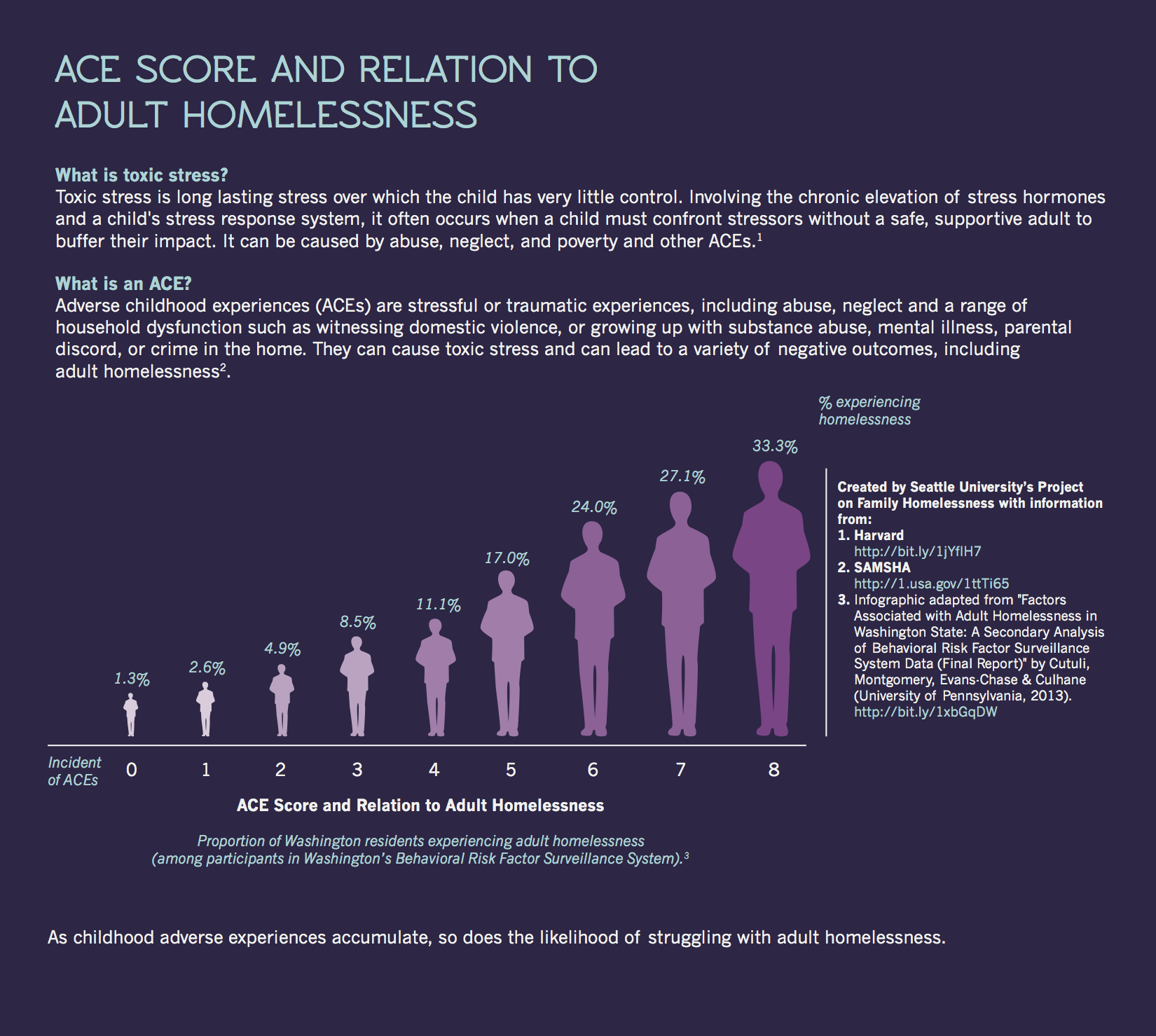
The greatest predictor of homelessness is not addiction or mental illness. It is Adverse Childhood Experiences, the developmental trauma that can predict all three.
Ask most people what drives homelessness and the answers are predictable: addiction, mental illness, personal failure. These assumptions shape public opinion, media coverage, and policy decisions at every level of government. They also happen to be wrong.
The greatest predictor of homelessness is Adverse Childhood Experiences.
ACEs include abuse, neglect, exposure to violence, and parental incarceration or addiction. The research on their impact is extensive and well documented. The Kaiser Permanente ACE Study established that these experiences correlate directly with chronic health conditions, substance use disorders, and housing instability across a person's lifetime. Nadine Burke Harris's research confirmed that the toxic stress produced by ACEs creates measurable physiological damage that compounds over decades.
ACEs reshape the developing brain. Emotional regulation, attention, impulse control, and stress management are all affected. So are memory, decision-making, and the ability to plan and execute tasks. These are the exact capacities a person needs to maintain stable housing, hold employment, and complete an education.
One in every three adults who report eight or more ACEs will experience homelessness. One in three.
That number should change the way we talk about this crisis. The addiction and mental illness that people point to as root causes are themselves predictable outcomes of childhood trauma. Homelessness is not a product of personal choice or willpower. For millions of people, it is the endpoint of developmental trauma that was never identified or treated.
Why This Matters for Service Delivery
When programs fail to account for ACEs, staff misread the signs. Behaviors rooted in survival, such as avoidance, distrust of authority, difficulty keeping appointments, and emotional reactivity, get labeled as resistance, noncompliance, or bad behavior. This misinterpretation damages the relationship between provider and client at the exact moment it matters most.
Congregate shelter environments intensify these dynamics. The majority of shelter residents report that the experience worsens their trauma symptoms. Sleeping among strangers, surrendering possessions, and following rigid schedules can activate the same stress responses that ACEs originally created.
The cognitive toll of homelessness itself compounds everything. Research on scarcity and cognition has shown that the mental burden of poverty and housing instability reduces working memory capacity by the equivalent of 14 IQ points. A person navigating unsheltered homelessness is making critical decisions about their future while operating under conditions that structurally impair their ability to do so.
How We Approach This at Anything Helps
We operate from the assumption that the people we serve developed their behaviors to survive. Hypervigilance kept them safe. Distrust protected them from exploitation. Avoidance reduced their exposure to harm. These responses were adaptive in the environments that produced them.
Our role is to create conditions where those responses are no longer necessary. That starts with safety, consistency, and time. We do not front-load data collection or demand personal information before trust has been established. We earn the relationship through reliable presence and follow-through. We let each person set the pace.
This is the foundation of everything we do through our Pathfinders model. When a person feels safe enough to engage on their own terms, healing becomes possible. When we rush that process or mistake survival behavior for defiance, we replicate the harm that brought them to us in the first place.
Stay Connected
Get updates on our work delivered to your inbox.