Housing FIrst Done Right & Wrong
The evidence-based model that ends chronic homelessness, the ways we've gotten it wrong, and why fidelity is the only path forward.
We believe in Housing First because the evidence is clear: when implemented with fidelity, it ends chronic homelessness. The Pathways Housing First model, developed by Sam Tsemberis, PhD, is the only evidence-based practice specifically designed for people experiencing chronic homelessness who are living with serious mental illness, substance use disorders, or both. It has been recognized by SAMHSA as a certified intervention and replicated across countries worldwide.
The model works because it is built on a simple premise: a person cannot begin to recover while living on the street. Stability comes first. Services follow. The person decides the pace.
Finland adopted this approach at a national scale. Today the entire country operates with 50 emergency shelter beds and has achieved functional zero homelessness. The United States maintains over 500,000 shelter beds, and homelessness continues to rise.
The Four Components of the Model
Housing First is a specific clinical intervention with four required components. Programs that omit any of these are not operating the model, regardless of what they call themselves.
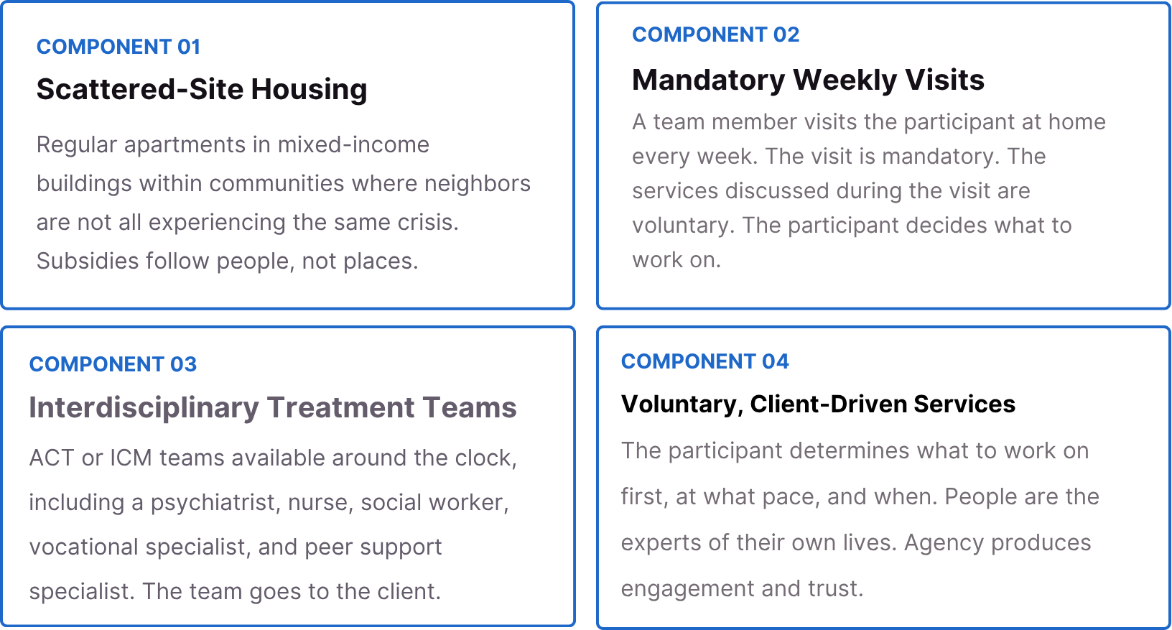
When all four components are present and implemented with fidelity, Housing First achieves documented reductions in returns to homelessness, cost savings for cities, and measurable improvements in quality of life and community integration.
The Fidelity Problem Most programs in the United States that use the term "Housing First" are not following the Pathways model. After HUD adopted the label as a broad policy framework, the term was separated from the clinical practice it described. Programs that require sobriety before housing, mandate shelter stays as a precondition, or use congregate settings instead of scattered-site apartments are not implementing Housing First. The label persists, but the model does not.
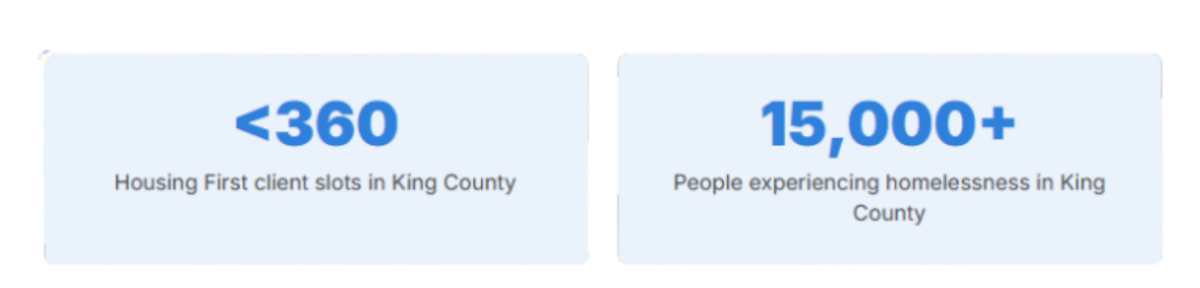
In King County, Washington, only four ACT/ICM teams exist with a combined capacity of fewer than 360 people. There are over 15,000 people experiencing homelessness in the county. Weekly housing visits are not funded or offered. The regional homelessness authority uses the term Housing First so broadly it lacks resemblance to the original meaning.
When programs that lack core components produce poor outcomes, those failures are attributed to the model itself. This creates a feedback loop: unfaithful implementation produces bad results, bad results generate political opposition, and political opposition drives investment away from permanent housing and toward shelter expansion. The model is being judged by outcomes it was never given the chance to produce.
Washington State saw a 56% increase in chronic homelessness in a single year (2023 to 2024) and now has the largest chronically homeless population in the country. Eight years into a state of emergency, the numbers continue to rise. The response has been more shelter beds, more encampment sweeps, and less permanent housing. The evidence tells us this will make the problem worse.
We provide Foundational Community Supports (FCS) through Washington State's Medicaid Waiver program, delivering Supportive Housing and Supported Employment services across King, Snohomish, and Pierce counties. Our Dual-Domain Service model gives frontline workers a streamlined way to provide a holistic array of services to our clients, and Medicaid funding allows us to provide that support to those clients on a time-unlimited basis. Once a client is housed, the real work begins - because homelessness cannot be solved for just through housing - it requires stability.
Our approach is rooted in relationship. We do not front-load data collection or demand personal information before trust has been established. We earn that relationship through consistent presence, reliable follow-through, and respect for each person's autonomy. We meet people where they are, physically and emotionally, and deliver services when and where it's convenient for the client. And the outcomes speak for themselves.
When you believe that people are the experts of their own lives, you end up listening more than talking. Our job is to remove barriers and create access to the housing, employment, and support that each person identifies as meaningful to their own stability. Our clients stay engaged with us for years because they know we have their best interests in mind - because they tell us what those interests actually are.
The Path Forward
Ending chronic homelessness requires implementing evidence-based practices with fidelity, and our model does exactly that. We partner with scattered-site housing providers in mixed-income neighborhoods. We work with interdisciplinary treatment providers, and we check in our clients weekly to build trust and stability.
We know what works. The evidence has been published, peer-reviewed, and replicated internationally. I'm unsure whether our response to homelessness will follow it, but we certainly will.
Stay Connected
Get updates on our work delivered to your inbox.